In the world of healthcare IT, challenges aren't just technical—they’re structural. Tight budgets, understaffed ICT teams, and a recurring nightmare called the annual pentest create a perfect storm of stress.
For the sake of compliance, CISOs and IT leaders are often forced to hire cybersecurity firms to perform manual assessments. The end result? A 200-page PDF filled with a "rainbow of colors" and a list of tasks long enough to last the next decade. By the time you’ve even finished reading it, the data is already out of date.
And that’s if you’re lucky. If you’re unlucky, that security scan just hit a legacy PACS workstation or an unpatchable infusion pump, sending the whole system into darkness—simply because your overworked team forgot to mention a single device during the scoping meeting.
The problem of "Check-the-Box" approach
For years, the "solution" has been this annual ritual. You pay a significant amount for a penetration test which, if you are a public hospital, you likely procured through a public tender where the lowest offer won. You don’t know the company, and you certainly don’t know their expertise, but there is no other way.
Lacking internal security experts, you anxiously await that PDF report, hoping it’s mostly green and yellow. But what you really get is just a snapshot in time—a list of issues that neither you nor your team fully understands.
Under the new NIS2 Directive, this approach is no longer adequate. NIS2 demands continuous risk management, not a once-a-year document that sits in a drawer. At the same time, the stakes have never been higher. Cybersecurity incidents and attacks on critical infrastructure are rising, and that annual pentest won't make you any more secure.
Enter ANCHOR: Continuous visibility without the crash
As part of the CYSSDE project (supported by the Digital Europe Programme), we have launched Project ANCHOR. Our goal is to alleviate the pressure on hospital ICT teams.
We believe security should be a continuous heartbeat, not a traumatic annual event. The only path toward a better security posture is to put the right tools directly into the hands of IT operators.
We are well aware of the scarcity of personnel and budget in healthcare. Project ANCHOR is developing tools that make the transition from "annual" to "continuous" cost-efficient. Our goal is to free up your pentesting budget for targeted, high-value scenarios that mimic real attacker patterns, rather than wasting it on yet another automated scan.
How ANCHOR changes the game?
- Purposely-made Assessment Methodology: Hospital infrastructure is a "fragile" mix of modern cloud systems and 15-year-old medical devices. We developed a testing framework specifically for healthcare environments, designed in cooperation with medical institutions to ensure we take real-world use cases into account.
- Automated Testing for IT, Not Just Security Experts: Most commercial tools are designed for high-level security professionals. ANCHOR is built for the healthcare ICT workers.
- Passive Discovery (The "Do No Harm" Approach): ANCHOR identifies devices by monitoring traffic. We can find a fragile medical device without ever sending it a dangerous packet.
- "Living Dashboards" Instead of Static Reports: Forget the 200-page PDF. ANCHOR uses a Kanban-style remediation board where vulnerabilities are assigned, tracked, and automatically re-validated once fixed.
- Asset Enrichment: A vulnerability on a guest Wi-Fi printer is not the same as one on a patient database. ANCHOR integrates with your existing tools to help you prioritize fixes based on actual clinical risk.
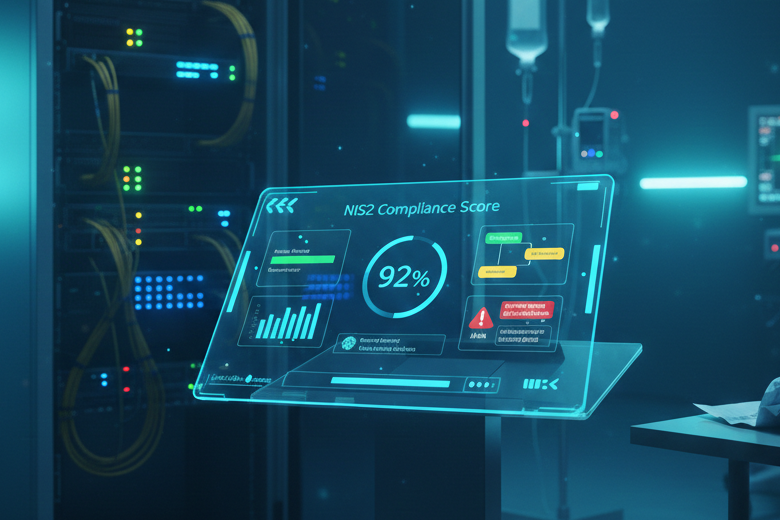
- NIS2 Compliance at a Glance: You’ll always know your exposure and key metrics like Mean-time-to-patch. Whether you are reporting to your Board of Directors or an auditor, you can export a clear, evidence-based status report of your entire environment in one click.
Moving Beyond the Annual Audit
Security in healthcare is no longer about passing a test once a year; it’s about maintaining a constant state of resilience. By moving to a continuous, automated, and "fragile-aware" system like ANCHOR, you can protect your patients’ data without risking their care, unlocking time and money to focus on discovering and patching the hidden holes in your system.
Ready to see how ANCHOR can strengthen your facility’s resilience? Give us a call.